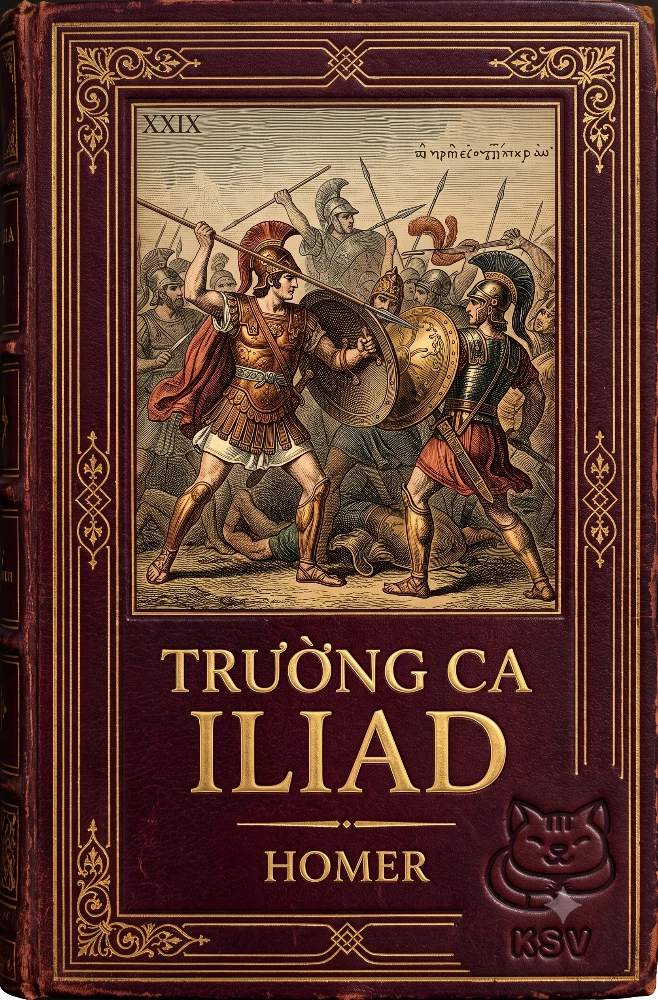
The Iliad is Homer's epic of a few weeks in the tenth year of the Trojan War, set off when a quarrel over a captive woman drives Achilles from the fighting. There is no wooden horse here. The poem stays on the plain before Troy, where the gods bicker like a bad family and Hector, defending his city, gets as much tenderness as any Greek. It counts the dead by name.
For a learner this is hard going. Books are long, most past 7,000 syllables of Vietnamese, battle scenes run through name after unfamiliar name, and the vocabulary of spears, chariots and sacrifice is specialised. Court language is everywhere: bệ hạ, chư thần, lão trượng. The reward is hearing rank and contempt in the pronouns. Agamemnon calls Achilles ngươi and gets back a cold ông, and an old priest is dismissed as lão. The English is Samuel Butler's prose, with his Roman names (Jove, Minerva, Ulysses).